Digital Tourism
Contents
“The first destination every tourist visits today is no longer a city, a beach, or a mountain. It is a search engine.”
That statement may sound exaggerated.
I would argue that it is now one of the most important realities shaping tourism—not only in Negros Occidental but across the world.
Ask yourself a simple question.
When did your last vacation actually begin?
Was it when you boarded the airplane?
When you checked into your hotel?
When you finally saw the beach you had dreamed about for months?
Probably not.
Long before your luggage was packed, your journey had already started.
You searched Google.
You watched YouTube videos.
You compared hotel prices.
You zoomed in on Google Maps.
You browsed Facebook and Instagram.
You read reviews from complete strangers.
Perhaps you even asked an Artificial Intelligence platform to help you build an itinerary.
Without realizing it, you had already become part of what marketers now call digital tourism.
The journey had already begun.
Not on the road.
But online.
One of the biggest misconceptions in tourism is believing that a visitor’s experience starts upon arrival.
It doesn’t.
Today’s visitor experiences a destination twice.
The first visit happens digitally.
The second happens physically.
That first visit is increasingly becoming the more influential one.
Before booking a flight to Negros Occidental, a traveler may spend several evenings comparing destinations across the Philippines. They watch travel vlogs featuring Sipalay’s white-sand beaches, browse photographs of The Ruins at sunset, search for the best Chicken Inasal in Bacolod, compare hotel prices, read Google Reviews, explore suggested itineraries, and check whether attractions are conveniently located on Google Maps.
During those few hours, something significant happens.
Expectations are formed.
Opinions develop.
Trust begins—or disappears.
The traveler hasn’t spent a single peso yet.
Yet the destination has already started marketing itself.
This is why I believe the future of digital tourism is no longer about convincing people to travel.
It is about becoming discoverable before travelers even decide where to go.
This may sound controversial, but I believe Negros Occidental has never struggled because it lacks attractions.
It struggles because many of its best experiences remain hidden behind weak digital visibility.
Think about what the province already offers.
It has one of the country’s most recognizable festivals.
It has a rich culinary heritage.
It has ancestral houses that rival the heritage districts of other Philippine cities.
It has mountain resorts, diving destinations, farm tourism, museums, sugar heritage sites, artists, craftsmen, coffee culture, and communities that continue to preserve traditions despite rapid modernization.
Objectively speaking, Negros Occidental has many of the ingredients needed to become one of the country’s premier tourism destinations.
Yet ask travelers outside Western Visayas to name places they would immediately visit in the Philippines.
Many will mention Palawan.
Siargao.
Bohol.
Cebu.
Perhaps Batanes.
Negros Occidental often enters the conversation much later.
The question is not whether the province is worth visiting.
The question is whether enough people are discovering it.
Those are two very different issues.
There was a time when tourism marketing was relatively straightforward.
Tourism offices produced brochures.
Hotels purchased newspaper advertisements.
Television programs featured destinations during holiday seasons.
Travel agencies became the primary source of information for planning vacations.
Communication flowed in one direction.
Destinations spoke.
Travelers listened.
That model no longer reflects how most people plan their trips.
Today’s travelers verify everything.
A promotional photograph immediately leads to Google Reviews.
A tourism advertisement is followed by a YouTube search.
A Facebook post prompts a visit to Google Maps.
An attractive hotel website encourages travelers to compare prices across multiple booking platforms.
Instead of accepting promotional messages at face value, people seek confirmation from independent sources.
In other words, tourism has shifted from telling stories to earning trust.
That shift represents one of the most important transformations in digital tourism over the past two decades.
Perhaps the biggest mistake tourism stakeholders still make is believing they compete only with neighboring destinations.
They don’t.
Negros Occidental isn’t competing solely with Iloilo or Antique.
It competes with every destination appearing on a traveler’s screen.
When someone searches “best island vacation in the Philippines,” Sipalay quietly competes with El Nido, Coron, Siargao, Camiguin, Bantayan, Boracay, Panglao, and destinations that may even be outside the country.
Attention has become tourism’s most valuable currency.
Every search result.
Every review.
Every travel article.
Every photograph.
Every recommendation.
Each one competes for a few seconds of attention that may eventually become a booking.
That is why digital tourism is no longer simply about promoting destinations.
It is about remaining visible in an increasingly crowded digital marketplace.
Rather than viewing this transformation as a challenge, I believe Negros Occidental should see it as an opportunity.
Unlike traditional tourism marketing, digital platforms have lowered the barriers to reaching global audiences.
A compelling travel story.
An honest Google Review.
A well-written travel blog.
A beautifully produced short-form video.
A responsive tourism website.
Together, these digital touchpoints can introduce the province to travelers who might never have encountered it through conventional advertising.
Digital tourism has made destination marketing more democratic.
Large budgets still matter.
But authenticity, consistency, and discoverability matter even more.
Perhaps that is the greatest lesson of all.
Tourism no longer begins when visitors arrive.
It begins the moment curiosity meets a search bar.
And increasingly, the destinations that understand this reality will become the destinations people remember, recommend, and return to.
“The most persuasive tourism campaign today is often created by someone who was never paid to promote the destination.”
There is a reason why tourism advertisements no longer enjoy the influence they once had.
It isn’t because destinations have become less attractive.
Nor is it because tourism offices have stopped promoting them.
It is because travelers have changed.
Today’s travelers no longer make decisions based on what destinations say about themselves.
They make decisions based on what other travelers say.
This may be one of the most significant shifts brought about by digital tourism, yet many destinations continue marketing themselves as though nothing has changed.
That is a costly mistake.
One of the greatest strengths of digital tourism is that it has given travelers access to information that was once difficult—or even impossible—to obtain.
Imagine planning a four-day holiday in Negros Occidental.
Twenty years ago, you might have visited a travel agency, requested brochures, or relied on newspaper travel sections. You accepted whatever information was available because there were few alternatives.
Today, the process looks completely different.
A traveler can compare ten hotels in less than fifteen minutes.
Watch three travel documentaries before breakfast.
Read hundreds of Google Reviews before lunch.
Compare airfare prices across several booking platforms in the afternoon.
By evening, an entire itinerary has already been created.
The modern traveler is no longer information-poor.
Instead, the challenge is deciding which information deserves to be trusted.
That single change has transformed tourism marketing forever.
One observation has become increasingly difficult to ignore.
Many tourism organizations continue investing heavily in promotional materials while underestimating the value of authentic visitor experiences.
Yet ask yourself honestly.
Before booking your last hotel, whose opinion carried greater weight?
A beautifully designed brochure?
Or 500 Google Reviews?
Before choosing a restaurant in Bacolod, did you rely on its advertisement?
Or did you scroll through photographs uploaded by previous diners?
Before selecting a beach resort in Sipalay, did you trust the promotional video?
Or did you search YouTube for independent travel vlogs?
The answer is obvious.
Today’s tourism brochure is no longer produced exclusively by tourism offices.
It is written collectively by thousands of travelers sharing their own experiences online.
Every review.
Every photograph.
Every travel story.
Every recommendation.
Together, they become the destination’s most persuasive marketing campaign.
There was a time when a destination’s tourism office served as its primary information center.
Today, that role increasingly belongs to search engines.
The first question most travelers ask is no longer,
“Where is the tourism office?”
It is,
“What does Google say?”
That simple habit changes everything.
Search engines do not merely organize information.
They determine what information travelers see first.
If Negros Occidental appears prominently when someone searches for heritage tourism, culinary experiences, diving destinations, or cultural festivals, the province immediately enters the traveler’s consideration set.
If it does not appear, another destination takes its place.
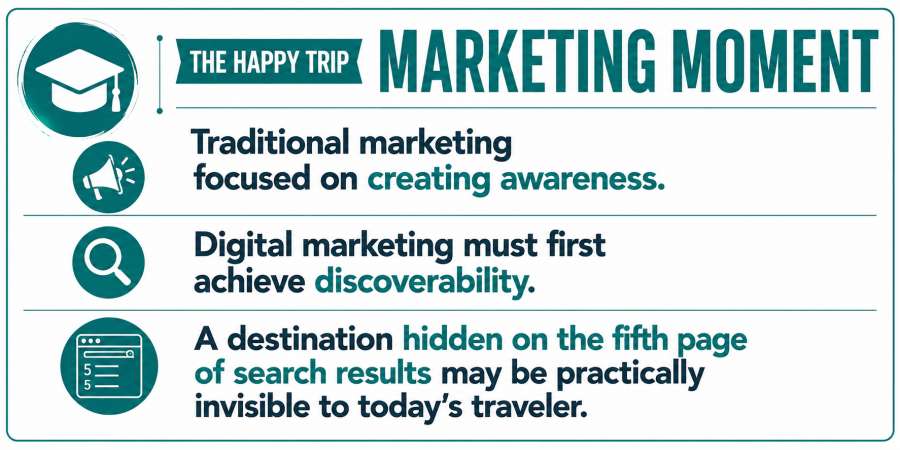
This is why search visibility has become one of the most valuable assets in digital tourism.
Destinations cannot be chosen if they cannot first be discovered.
Human beings have always trusted recommendations.
The difference today is the scale.
Years ago, recommendations came primarily from relatives, neighbors, or close friends.
Today, they also come from people we have never met.
Travel bloggers.
YouTubers.
Food vloggers.
Instagram creators.
TikTok travelers.
Ordinary tourists posting honest experiences.
Collectively, they create what marketers call social proof—the tendency for people to look at the experiences of others before making decisions.
Whether we recognize it or not, social proof shapes nearly every vacation.
It explains why restaurants proudly display customer ratings.
Why hotels encourage guests to leave reviews.
Why destinations celebrate user-generated content.
People trust people.
Often more than they trust advertisements.
This is where travel blogs continue to play an important role.
Contrary to popular belief, readers do not visit travel blogs simply to admire photographs.
They come looking for perspective.
A good travel blog answers questions that promotional brochures rarely ask.
Is four days enough to explore Negros Occidental?
How much travel time should visitors expect between Bacolod and Sipalay?
Which local delicacies are genuinely worth trying?
Which attractions deserve more attention than they currently receive?
Travel blogs also do something algorithms cannot easily replicate.
They provide context.
A travel writer explains not only where to go but why the place matters.
That context builds confidence.
Confidence encourages action.
This is why I believe travel blogs are more than a collection of destination guides.
It is part of the digital tourism ecosystem that helps travelers make informed decisions.
The role of responsible travel writing is not to persuade readers to visit a destination at any cost.
Its role is to help them decide whether the destination is right for them.
That distinction is important.
Because credibility is far more difficult to build than traffic.
One misconception still persists in destination marketing.
Many believe digital marketing is about creating perfect images.
Perfect destinations.
Perfect experiences.
Perfect vacations.
Ironically, digital tourism often rewards authenticity more than perfection.
Travelers appreciate honest recommendations.
Balanced reviews.
Practical advice.
Unexpected discoveries.
Even small inconveniences, when honestly described, often make travel stories more believable.
People understand that no destination is perfect.
What they want is confidence that the experience will be worthwhile.
Authenticity has become one of tourism’s strongest competitive advantages.
That is something no advertising budget alone can purchase.
If I could offer one recommendation to tourism stakeholders across Negros Occidental, it would not be,
“Spend more on advertising.”
Instead, I would suggest this:
Make every visitor worth listening to.
Because satisfied visitors become storytellers.
Storytellers become advocates.
Advocates influence future travelers.
And those future travelers begin their own journeys exactly where today’s travelers do.
Not at the airport.
Not at the ferry terminal.
Not at the hotel reception desk.
But on a search engine.
That is where digital tourism truly begins.
And increasingly, it is where the future of tourism will be decided.
“Tourism marketers often believe they are selling destinations. In reality, they are managing a journey that begins long before the traveler arrives.”
Perhaps the biggest misunderstanding in tourism today is believing that marketing ends once a traveler books a flight.
In truth, marketing has only reached the halfway point.
By the time someone confirms a reservation in Negros Occidental, dozens—sometimes hundreds—of decisions have already been made.
A destination was discovered.
Another was eliminated.
A hotel was compared.
A restaurant was shortlisted.
A travel article was bookmarked.
A review was trusted.
A YouTube video inspired confidence.
An itinerary slowly came together.
None of these moments seem particularly significant when viewed individually.
Collectively, however, they determine whether a destination earns a visitor—or loses one.
This invisible sequence of interactions is what makes digital tourism fundamentally different from traditional tourism marketing.
Think back to your last vacation.
How much time did you spend planning compared with actually traveling?
For many travelers today, planning occupies almost as much time as the vacation itself.
Research has become entertainment.
Comparing destinations has become part of the excitement.
Watching travel videos builds anticipation.
Saving locations on Google Maps creates emotional investment.
Reading restaurant reviews makes travelers imagine the meals they will soon enjoy.
In other words, planning is no longer merely preparation.
Planning has become part of the travel experience.
Tourism organizations that recognize this create content that serves travelers before they ever arrive.
Those that ignore this reality continue producing marketing materials that appear only after decisions have already been made.
Marketing textbooks often describe the customer journey as the path customers follow before, during, and after purchasing a product or service.
That definition is accurate.
But tourism allows us to see the concept in action.
Imagine a family from Manila planning a school-break vacation.
Their first search is broad.
“Where should we travel this summer?”
Several destinations appear.
Palawan.
Cebu.
Bohol.
Negros Occidental.
Curiosity begins.
A few minutes later they search,
“Things to do in Bacolod.”
Then,
“Best resorts in Sipalay.”
Later,
“How far is The Ruins from Bacolod City?”
Eventually they begin comparing accommodation prices.
Reading reviews.
Watching travel vlogs.
Saving itineraries.
Booking flights.
Without realizing it, they have moved through an invisible journey.
No tourism office instructed them to do so.
Their curiosity naturally guided each step.
This is why successful tourism marketing is no longer about delivering one powerful advertisement.
It is about providing the right information at every stage of the decision-making process.
Every traveler experiences six emotional stages, even if they never recognize them consciously.
First comes awareness.
They discover a destination.
Then comes interest.
They begin searching for more information.
Interest gradually develops into consideration, where several destinations compete for attention.
Eventually comes action.
Flights are booked.
Hotels are reserved.
The vacation begins.
Or does it?
Not quite.
The journey continues through retention, when memorable experiences encourage travelers to return.
Finally comes advocacy, where visitors willingly recommend the destination to others.
What fascinates me is that many tourism organizations devote nearly all of their resources to the first four stages while paying far less attention to the last two.
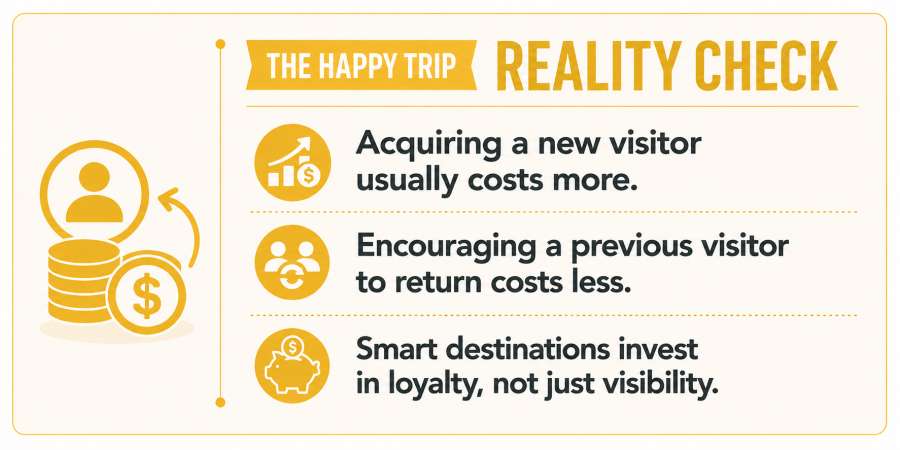
Yet loyalty and advocacy are often where the greatest long-term value is created.
Satisfied visitors become volunteer marketers.
And volunteer marketers are remarkably persuasive.
Many destinations celebrate visitor arrivals.
Few celebrate visitor recommendations.
I believe they should.
A traveler who uploads photographs of Sipalay’s sunset may inspire hundreds of future visitors.
A thoughtful Google Review of a heritage hotel in Silay may influence someone’s booking decision months later.
A Facebook album showcasing local cuisine in Bacolod quietly becomes another piece of tourism marketing.
These are not advertisements.
They are lived experiences.
And lived experiences carry extraordinary influence because they are perceived as authentic.
This is one reason why digital tourism has become increasingly dependent on user-generated content.
The destination no longer owns the story.
Visitors help write it.
Some marketers argue that the traditional marketing funnel has become outdated.
I disagree.
It has not disappeared.
It has evolved.
Travelers still move through recognizable stages.
They first become aware of a destination.
They develop interest.
They begin to desire the experience.
Eventually they take action.
The difference is that today’s funnel is no longer controlled entirely by marketers.
Travelers enter and leave it repeatedly.
They pause.
Compare alternatives.
Return weeks later.
Read more reviews.
Watch another video.
Consult Artificial Intelligence for itinerary suggestions.
Then continue where they left off.
The modern marketing funnel is no longer linear.
It is dynamic.
That reality explains why tourism organizations must remain visible throughout the entire decision-making process.
Not just at the beginning.
Hotels often celebrate successful bookings.
Airlines celebrate ticket sales.
Tour operators celebrate confirmed reservations.
Those milestones matter.
But they should never be mistaken for the destination’s ultimate goal.
The real objective is not merely attracting visitors.
It is creating experiences worth remembering.
After returning home, travelers continue interacting with destinations.
They recommend restaurants.
Share itineraries.
Write reviews.
Post photographs.
Respond to comments.
Suggest improvements.
Months later, they may return for another festival, another family vacation, or another weekend escape.
In this sense, the customer journey never truly ends.
It simply enters another stage.
That is one reason why relationship-building has become more valuable than one-time promotions.
Perhaps this is why tourism provides one of the clearest illustrations of modern marketing.
Every concept that students encounter in a digital marketing classroom becomes visible in the traveler’s experience.
Consumer behavior is revealed through online research.
The customer journey unfolds through digital touchpoints.
The marketing funnel becomes visible through every decision leading toward a reservation.
Loyalty appears when visitors return.
Advocacy appears when they recommend the destination to others.
Tourism transforms marketing theory into something tangible.
Negros Occidental simply provides the setting where those lessons become easier to observe.
For me, that is the true value of digital tourism.
It reminds us that marketing has never been about selling products.
It has always been about understanding people.
And every vacation begins by understanding how travelers think long before they begin packing their bags.
“If your digital tourism strategy begins and ends with Facebook, you don’t have a digital strategy. You have a social media account.”
This may be one of the most uncomfortable truths confronting tourism today.
Across the Philippines, many tourism offices, local governments, resorts, restaurants, museums, and attractions proudly point to their Facebook pages as proof that they have embraced digital marketing.
Some even equate an active social media page with a comprehensive digital strategy.
I disagree.
Facebook is important.
Instagram is important.
TikTok is important.
But they are only parts of something much larger.
Digital tourism is not built around a single platform.
It is built around an ecosystem.
That distinction matters because travelers no longer experience destinations through one digital channel.
They move effortlessly from one platform to another, often within minutes.
Tourism organizations must learn to move with them.
Imagine a traveler from Singapore planning to visit Negros Occidental.
Where does the journey begin?
Not necessarily on Facebook.
Perhaps Google displays a travel article about Bacolod’s culinary scene.
The traveler then visits the province’s tourism website.
From there, they watch a YouTube video featuring Sipalay.
Google Maps helps estimate travel times.
Hotel booking platforms provide accommodation options.
Instagram offers visual inspiration.
Google Reviews answer lingering questions.
An airline app confirms the booking.
Email delivers the reservation.
Artificial Intelligence recommends an itinerary.
Every platform contributes something different.
Collectively, they create one seamless experience.
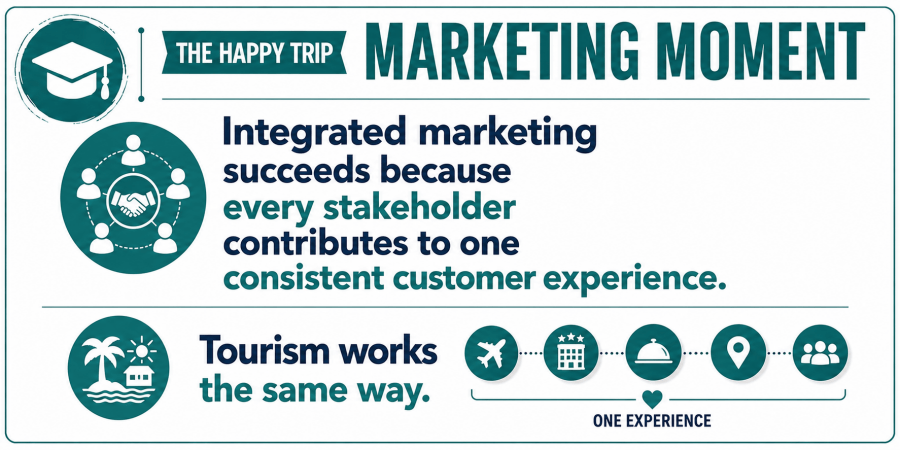
This interconnected network is what marketers describe as the digital marketing ecosystem.
For travelers, however, it simply feels like planning a vacation.
One mistake I often observe is expecting every digital platform to perform the same function.
That is like asking an airport, a hotel, and a restaurant to perform identical roles.
Each contributes differently to the overall experience.
The same principle applies to digital tourism.
Search engines create discoverability.
Websites provide detailed information.
Travel blogs offer context and perspective.
Social media creates inspiration.
Booking platforms facilitate transactions.
Google Maps improves navigation.
Email strengthens relationships.
Customer Relationship Management (CRM) systems personalize communication.
Analytics reveal visitor behavior.
Artificial Intelligence enhances decision-making.
No single platform can accomplish everything.
The strength of digital tourism lies not in individual channels but in how effectively they work together.
Social media often receives the most attention.
Yet websites remain the foundation of digital tourism.
Why?
Because destinations own their websites.
They do not own Facebook.
They do not own Instagram.
They certainly do not control changing algorithms.
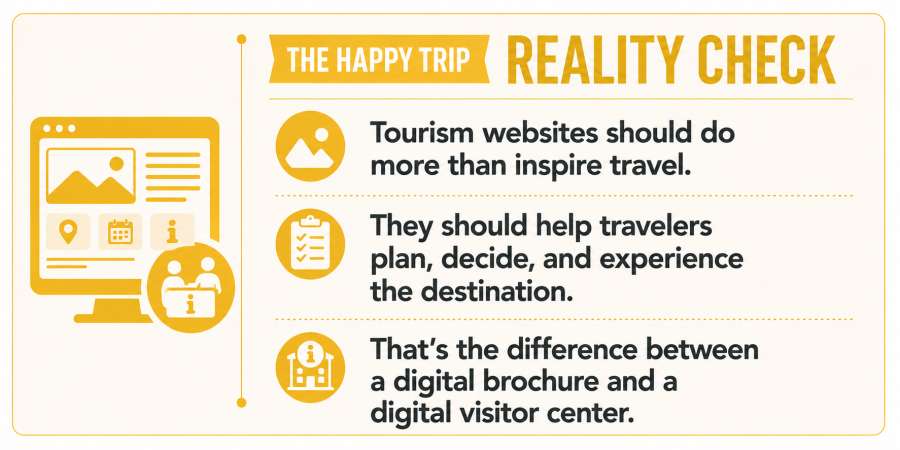
A tourism website should answer every practical question a traveler might ask.
How do I get there?
Where should I stay?
What attractions should I visit?
How much time should I allocate?
Where can I eat?
How do I contact the tourism office?
Which festivals coincide with my visit?
Can I book online?
If travelers leave a website with more questions than answers, another destination is only one click away.
That is the reality of digital tourism.
Many tourism organizations become preoccupied with increasing followers.
Followers certainly matter.
Visibility matters even more.
Consider two situations.
One destination has one hundred thousand Facebook followers.
Another consistently appears at the top of Google whenever travelers search for heritage tourism, food experiences, or beaches in Western Visayas.
Which destination enjoys greater long-term visibility?
I would argue the second.
People search with intent.
They search because they are actively looking for answers.
That is why search engines remain one of the most powerful gateways into digital tourism.
Travel begins with curiosity.
Curiosity almost always begins with a search.
There was a time when many believed travel blogs would disappear.
Instead, their role has evolved.
Readers no longer visit travel blogs simply to admire destinations.
They seek authenticity.
Practical advice.
Balanced opinions.
Local insights.
Personal experiences.
Good travel writing fills the gap between official information and lived experience.
That is where The Happy Trip contributes to the digital tourism ecosystem.
It does not replace tourism offices.
It complements them.
It translates destinations into stories.
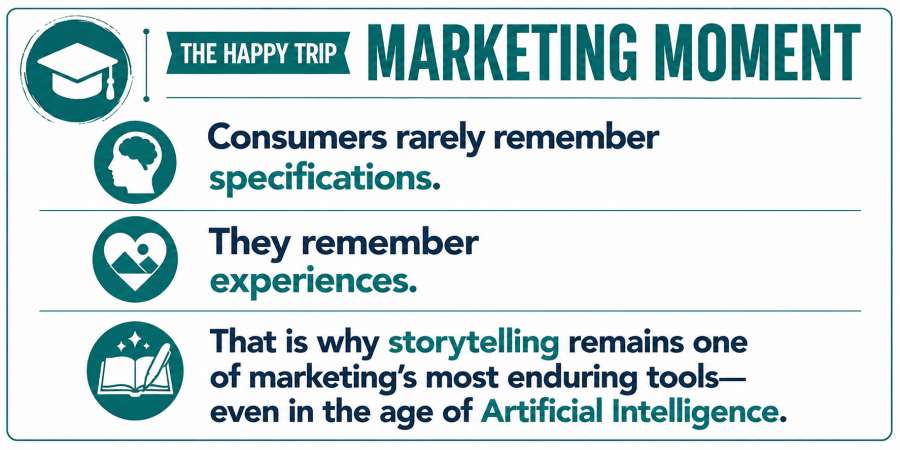
Stories remain one of tourism’s most persuasive forms of communication because they allow readers to imagine themselves within the experience.
Information informs.
Stories inspire.
Destinations need both.
If I were asked to identify the most underappreciated marketing tool in tourism, my answer would surprise many people.
It is not TikTok.
It is not Facebook.
It is not even Artificial Intelligence.
It is email.
Email continues the relationship after visitors return home.
A thoughtful thank-you message.
Announcements about the next MassKara Festival.
Exclusive offers for returning guests.
Updates about new attractions.
Recommendations based on previous visits.
These small communications remind visitors that their relationship with the destination did not end when they checked out of their hotel.
Tourism should never treat visitors as one-time customers.
It should cultivate lifelong relationships.
Perhaps the greatest advantage of digital marketing is not that it is cheaper.
It is that it is measurable.
Tourism organizations can now understand:
Which attractions receive the most searches?
Which travel articles attract the longest reading time?
Which destinations visitors abandon before booking?
Which social media campaigns generate website traffic?
Which photographs inspire the highest engagement?
Which countries show increasing interest in Negros Occidental?
These insights enable better decisions.
Instead of relying on assumptions, tourism marketers can increasingly rely on evidence.
Good decisions require good data.
But data alone is never enough.
Data tells us what people do.
Understanding travelers explains why they do it.
The most successful tourism marketers learn to combine both.
Perhaps this is the most important lesson of all.
Digital tourism is not about mastering Facebook.
Or producing more TikTok videos.
Or publishing another travel brochure online.
It is about creating an integrated experience where every digital interaction reinforces the next.
The website should support social media.
Social media should encourage deeper exploration.
Travel blogs should strengthen credibility.
Reviews should validate expectations.
Maps should simplify navigation.
Booking systems should remove barriers.
Artificial Intelligence should personalize recommendations.
Every platform should make traveling easier.
When that happens, technology becomes almost invisible.
And that is exactly how good digital marketing should work.
Travelers remember the destination.
Not the technology behind it.
“Artificial Intelligence can help travelers discover a destination. It cannot make that destination worth remembering.”
Artificial Intelligence has quickly become one of the most discussed technologies in tourism.
Almost every week, another headline announces how AI is transforming travel planning, customer service, content creation, pricing strategies, or destination marketing.
The excitement is understandable.
Artificial Intelligence is changing tourism.
But I believe we are asking the wrong question.
Instead of asking,
“How can AI transform tourism?”
perhaps we should ask,
“How can AI help destinations become more human?”
That distinction may determine which destinations thrive in the coming decade.
Because despite all the excitement surrounding AI, tourism has always been—and will always remain—a people business.
Planning a vacation today is remarkably different from planning one only a few years ago.
Travelers increasingly ask AI-powered platforms to recommend destinations.
Build itineraries.
Suggest restaurants.
Translate local languages.
Estimate travel times.
Compare attractions.
Recommend hotels based on personal preferences.
Even before travelers visit Google, many are beginning to ask AI.
“Where should I spend four days in Western Visayas?”
“Create an itinerary for Negros Occidental.”
“Where can I find authentic Negrense food?”
“Which heritage attractions should I prioritize?”
Artificial Intelligence processes enormous amounts of information in seconds.
For travelers, this means less time searching and more time deciding.
For destinations, however, it creates an entirely new challenge.
If Artificial Intelligence cannot find reliable information about a destination, travelers may never discover it.
That is another reason why digital tourism increasingly depends upon quality digital content.
AI can only recommend what it can understand.
Many people imagine Artificial Intelligence as a futuristic technology.
The reality is much simpler.
Most travelers already use AI every day without realizing it.
Google predicts search results.
Maps estimate traffic conditions.
Booking platforms recommend hotels.
Streaming services suggest travel documentaries.
Airlines adjust ticket prices based on demand.
Translation apps interpret foreign languages almost instantly.
Chatbots answer customer inquiries around the clock.
Spam filters organize emails.
Recommendation engines suggest restaurants and attractions.
Artificial Intelligence has quietly become part of everyday travel.
Its greatest strength is not replacing people.
Its greatest strength is removing friction.
The easier it becomes to travel, the more valuable tourism becomes.
This question generates understandable concern among marketers, writers, photographers, designers, and tourism professionals.
My answer is both yes and no.
Artificial Intelligence can certainly perform many marketing tasks faster than humans.
It can summarize information.
Draft promotional copy.
Generate images.
Produce videos.
Analyze customer data.
Predict visitor behavior.
Automate repetitive communication.
These capabilities improve productivity.
But productivity is not the same as creativity.
Artificial Intelligence can tell visitors that Sipalay has beautiful beaches.
It cannot explain why watching the sunset there leaves people unexpectedly silent.
AI can describe the architecture of Silay’s ancestral houses.
It cannot capture the pride in a local guide’s voice while sharing stories passed down through generations.
AI can identify Bacolod’s most highly rated restaurants.
It cannot recreate the laughter around a family table while introducing visitors to authentic Negrense cuisine.
Tourism is ultimately built upon emotions.
Technology processes information.
People create meaning.
That difference remains profoundly important.
If every destination eventually gains access to the same AI tools, what will distinguish one place from another?
Not technology.
People.
Negros Occidental possesses many advantages that no algorithm can replicate.
Its hospitality.
Its artists.
Its local communities.
Its culinary traditions.
Its festivals.
Its heritage.
Its stories.
These are not digital assets.
They are human assets.
Technology should amplify them.
Never replace them.
This idea reflects one of the central principles of Marketing 5.0, where technology is used not to substitute human creativity but to strengthen it.
In tourism, this philosophy becomes especially relevant.
Visitors may initially discover destinations through technology.
They return because of human experiences.
Artificial Intelligence also forces tourism organizations to confront important ethical questions.
Should AI-generated photographs exaggerate destinations?
Should promotional videos remove overcrowding, pollution, or weather conditions that visitors are likely to encounter?
Should destinations publish AI-generated travel guides without verifying their accuracy?
Should businesses collect visitor information without explaining how the data will be used?
My answer to each of these questions is simple.
No.
The purpose of digital marketing is not to manipulate expectations.
It is to build trust.
Trust begins with honesty.
Travelers understand that every destination has limitations.
What they rarely forgive is deception.
The more sophisticated technology becomes, the greater the responsibility to use it ethically.
Artificial Intelligence should help visitors make better decisions—not mislead them into making the wrong ones.
Technology will continue evolving.
Search engines will become smarter.
Artificial Intelligence will become more conversational.
Virtual reality may allow travelers to preview destinations before they arrive.
Augmented reality may enrich museum visits.
Predictive analytics may personalize entire vacations.
All of these developments are exciting.
Yet one thing is unlikely to change.
Travelers will continue asking the same fundamental question.
“Can I trust this destination?”
Not,
“Is this destination using Artificial Intelligence?”
Trust cannot be automated.
It must be earned.
Every honest review.
Every accurate photograph.
Every helpful response.
Every authentic story.
Every memorable experience.
Together, they build a reputation that no algorithm alone can manufacture.
After discussing search engines, digital marketing, customer behavior, online reviews, customer journeys, integrated marketing ecosystems, and Artificial Intelligence, we arrive at what may be the simplest lesson of all.
Tourism has never been about technology.
Technology merely changes how people discover destinations.
It does not change why people travel.
People still travel to celebrate milestones.
To reconnect with family.
To experience unfamiliar cultures.
To enjoy local food.
To admire natural beauty.
To understand history.
To create memories.
Technology helps those journeys begin.
Human experiences make those journeys unforgettable.
For Negros Occidental, that may be its greatest opportunity.
The province does not need to become someone else.
It simply needs to become easier to discover—and remain authentic once visitors arrive.
That, for me, is the real promise of digital tourism.
“The destinations that will lead tomorrow are not necessarily those with the most attractions. They will be the ones that understand how travelers make decisions today.”
The first destination every tourist visits today is no longer a province, a city, or a beach. It is a search engine.
Everything else follows from that reality.
If we accept that statement—and I believe the evidence strongly supports it—then it becomes impossible to think about tourism the same way we did twenty years ago.
Destinations no longer compete only for visitors.
They compete for visibility.
They compete for credibility.
Most importantly, they compete for trust.
And all of these competitions begin long before a visitor arrives.
Technology evolves much faster than government plans, tourism campaigns, or infrastructure projects.
Artificial Intelligence continues to improve.
Search engines constantly refine their algorithms.
Travelers increasingly expect personalized recommendations.
Digital payment systems continue expanding.
Online reviews become more influential every year.
Yet many tourism destinations continue relying on strategies that were effective decades ago.
The danger is not that these strategies have become completely irrelevant.
The danger is believing they are still enough.
A printed brochure remains valuable.
A travel fair still has its place.
Television advertising continues to build awareness.
But digital tourism demands something more.
It demands continuous engagement.
Continuous updating.
Continuous listening.
Continuous improvement.
Marketing is no longer a campaign.
It has become an ongoing conversation.
As someone who has spent years traveling, writing about destinations, working with tourism stakeholders, and teaching marketing, I believe Negros Occidental possesses an extraordinary opportunity.
The province already has remarkable tourism assets.
Its challenge is no longer creating attractions.
Its challenge is connecting those attractions into one discoverable, consistent, and memorable digital experience.
Imagine if every municipality embraced the same vision.
Tourism websites were regularly updated.
Google Business Profiles were complete and accurate.
Local museums appeared prominently on search engines.
Restaurants actively encouraged honest customer reviews.
Hotels responded professionally to online feedback.
Tour operators published useful itineraries.
Artists and artisans became easier to discover online.
Every festival was supported by digital storytelling before, during, and after the event.
Every tourism stakeholder understood that they were not promoting only their own establishment.
They were collectively shaping the digital reputation of Negros Occidental.
That is what digital tourism looks like in practice.
One misconception deserves to be challenged.
Tourism marketing is often viewed as the responsibility of tourism offices alone.
It isn’t.
Hotels contribute to tourism.
Restaurants contribute to tourism.
Museums contribute to tourism.
Coffee shops contribute to tourism.
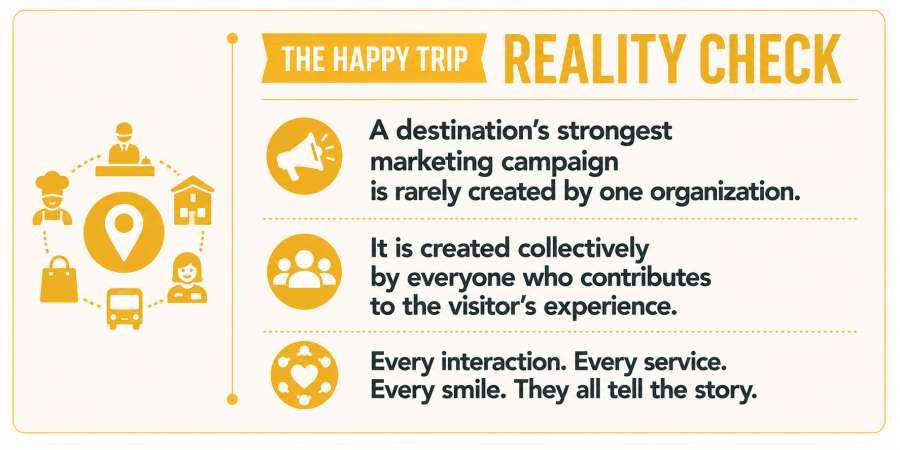
Drivers, tour guides, airport staff, artists, souvenir shops, local governments, bloggers, photographers, content creators, and residents all contribute to tourism.
Every interaction shapes the destination’s reputation.
Every online review strengthens—or weakens—the visitor’s confidence.
Every shared photograph becomes another invitation.
Every helpful response builds trust.
Digital tourism has made tourism everyone’s business.
That realization may be one of its most important lessons.
Although this article has focused on Negros Occidental, its message extends far beyond one province.
It is really about how people make decisions in the digital age.
Whether someone is choosing a vacation, purchasing a laptop, selecting a university, or deciding where to eat dinner, the underlying process is remarkably similar.
People search.
People compare.
People verify.
People evaluate.
People decide.
Technology has changed the tools.
It has not changed human nature.
People still seek confidence before making decisions.
People still trust authentic experiences.
People still value recommendations from others.
People still remember meaningful stories more than advertisements.
That is why understanding digital tourism is also understanding modern marketing.
Tourism simply makes these marketing principles easier to observe.
If I could leave one message for tourism planners, destination managers, entrepreneurs, and local governments, it would be this:
Stop asking only,
“How can we attract more visitors?”
Start asking,
“How do travelers discover us in the first place?”
Those two questions appear similar.
They are fundamentally different.
The first focuses on promotion.
The second focuses on understanding behavior.
Modern marketing begins with understanding behavior.
So does modern tourism.
For my students, I hope this article demonstrates something equally important.
Marketing frameworks are not merely theories found in textbooks.
They exist all around us.
Every Google search illustrates consumer behavior.
Every online review demonstrates social proof.
Every booking platform reflects the customer journey.
Every travel blog contributes to the digital marketing ecosystem.
Every AI recommendation reveals the growing influence of technology.
Every honest review reminds us why ethics remain essential.
The best way to understand marketing is not simply to memorize concepts.
It is to observe how people behave in the real world.
Tourism provides one of the best classrooms we could ask for.
When someone decides to visit Negros Occidental next month, the journey will not begin at Bacolod-Silay Airport.
It will begin tonight.
Perhaps while scrolling through social media.
Perhaps while searching Google.
Perhaps after reading a travel blog.
Perhaps after watching a short video.
Perhaps after reading a Google Review.
Perhaps after asking an Artificial Intelligence platform for travel recommendations.
The first destination they visit will not be Sipalay.
Or Silay.
Or Bacolod.
It will be a screen.
What happens on that screen will determine whether the journey continues.
That is why I believe digital tourism is no longer simply another branch of marketing.
It is becoming the foundation upon which modern tourism is built.
For Negros Occidental, the opportunity is clear.
The province does not need to reinvent itself.
It simply needs to become easier to discover, easier to trust, and impossible to forget.
Because in the end, travelers may arrive by airplane, ferry, or bus.
But almost every journey now begins with curiosity.
And curiosity almost always begins online.
Sustainable Destination Management Sustainable Destination Management: Why Tourism Should Benefit Communities as Much as Visitors…
Sustainable Tourism Operations Sustainable Tourism Operations: Why Managing Growth Matters More Than Attracting Tourists …
Bacolod Food Tourism Bacolod Food Tourism: Beyond UNESCO Recognition How Bacolod and Negros Occidental Can…
[ Sustainable Tourism in the Philippines ] - L-R: Yours Truly ; Mark Canieso ,Lei…
Plaza de MassKara Plaza de MassKara at The Upper East: A New Cultural Destination in…
Belmont Hotel Iloilo I Extended My Stay in Iloilo... and Belmont Hotel Became Part of…